
Take Five Alto Sax PDF: A Comprehensive Guide
Exploring “Take Five” arrangements for alto saxophone reveals a wealth of options, from solo performances to ensemble charts, readily available in PDF format for download.
Numerous arrangers, including John Zontek, Mike Lewis, LoganToTheMax, Music.Bear, and Austin Windorski, have adapted this jazz standard for various skill levels and instrumentation.

Digital sheet music platforms, like MuseScore.com, offer both free and paid options, catering to diverse budgets and musical needs, as of today, May 4th, 2026.

Understanding the Original Composition
“Take Five,” penned by Paul Desmond, stands as a cornerstone of cool jazz, celebrated for its unconventional 5/4 time signature – though some arrangements cleverly adapt it to 4/4. Originally recorded by The Dave Brubeck Quartet in 1959, the piece quickly ascended to iconic status, captivating audiences with its melodic simplicity and rhythmic intrigue.
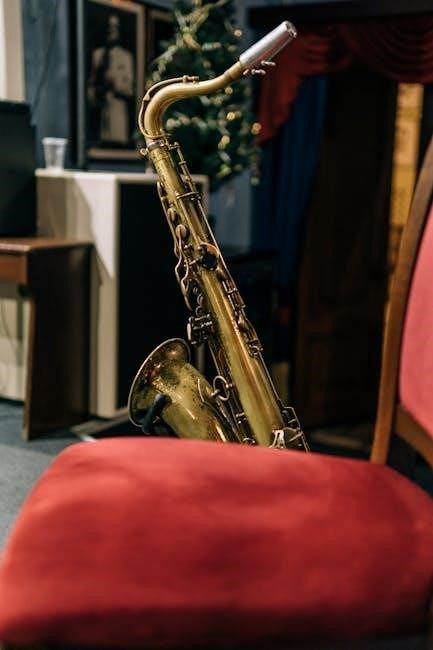
The alto saxophone, prominently featured in the original recording, carries the memorable main theme, a lyrical and instantly recognizable melody. Desmond’s phrasing and tone are integral to the song’s character, influencing countless saxophonists since.
When seeking alto sax PDFs, understanding the original’s structure is crucial. The AABA form, with its repeating melodic ideas and improvisational sections, provides a framework for arrangements. Many arrangements retain this core structure, while others explore variations and re-interpretations. Recognizing the original’s harmonic foundation and rhythmic nuances will enhance your performance and appreciation of these adaptations.
The History of “Take Five”
“Take Five” emerged from a period of experimentation within The Dave Brubeck Quartet, challenging conventional jazz norms with its 5/4 time signature. Initially, the unusual meter faced resistance from the quartet’s record label, who doubted its commercial viability. However, Desmond and Brubeck persevered, believing in the piece’s potential.
Released in 1959, the song became an unexpected hit, transcending jazz circles and entering mainstream popular culture. Its success demonstrated a willingness among audiences to embrace rhythmic complexity and melodic innovation.
The enduring popularity of “Take Five” has fueled a continuous stream of arrangements for various instruments, including numerous adaptations for alto saxophone, readily available as PDFs today. These arrangements reflect the song’s lasting influence and its appeal to musicians across generations, ensuring its continued presence in the jazz repertoire.
Paul Desmond and the Alto Saxophone
Paul Desmond, the alto saxophonist and composer of “Take Five,” possessed a remarkably lyrical and understated playing style, a stark contrast to the more assertive sounds prevalent in bebop. His tone was often described as “dry martini” – cool, crisp, and sophisticated. He favored a lighter embouchure and a focus on melodic phrasing, creating a distinctive sound instantly recognizable to jazz enthusiasts.
Desmond’s compositional approach was equally innovative. “Take Five” wasn’t initially intended as a jazz piece; it began as a compositional exercise exploring odd time signatures.
The availability of alto saxophone arrangements in PDF format allows musicians to study and emulate Desmond’s unique style, delving into the nuances of his phrasing and harmonic choices. These arrangements serve as valuable tools for learning and appreciating his contribution to jazz history.
Available Arrangements for Alto Saxophone
A diverse range of “Take Five” arrangements for alto saxophone are currently accessible in PDF format, catering to varying skill levels and ensemble sizes. Digital sheet music platforms host arrangements from composers like John Zontek and Mike Lewis, specifically tailored for jazz ensembles, often including suggested solos.

Solo arrangements allow saxophonists to tackle the melody and improvisation independently, while trio arrangements (alto, tenor, baritone sax) offer a chamber music experience. Quartet arrangements, featuring multiple alto saxophones alongside a tenor, provide richer harmonic textures.

MuseScore.com is a prominent source, offering free and paid options, with arrangements by LoganToTheMax, Music.Bear, and Austin Windorski readily available for download. These PDFs provide convenient access to this iconic tune.
Solo Alto Saxophone Arrangements
For the alto saxophonist seeking a self-contained challenge, several “Take Five” arrangements exist specifically for solo performance, available as downloadable PDFs. These arrangements distill the essence of the Dave Brubeck Quartet’s classic into a format demanding both melodic fluency and improvisational skill.
These solo versions often include the iconic melody, harmonic structure, and space for the performer to develop their own solos, mirroring Paul Desmond’s original approach. They require a strong understanding of the tune’s harmonic progression and rhythmic complexities.
While specific arrangers dedicated solely to solo alto saxophone PDFs weren’t explicitly named in the provided data, platforms like MuseScore.com are likely to host user-submitted arrangements fitting this description; Exploring these resources will reveal options for individual practice and performance.
Arrangements for Alto Saxophone and Jazz Band
“Take Five” lends itself beautifully to big band arrangements, and numerous charts featuring the alto saxophone as a prominent voice are available in PDF format. These arrangements typically include parts for piano, bass guitar, and a drum group, creating a full and dynamic jazz ensemble sound.
Austin Windorski’s arrangement, found on MuseScore.com, is a prime example, designed for a standard jazz band instrumentation. These charts often retain the original 5/4 time signature, presenting a unique rhythmic challenge and rewarding musical experience for performers.
The alto saxophone part in these arrangements often carries the melody or engages in call-and-response with other instruments, demanding both technical proficiency and stylistic sensitivity. These PDFs provide a fantastic opportunity for jazz bands to explore a timeless classic.
Alto Saxophone Trio Arrangements
For a more intimate setting, “Take Five” arrangements for alto saxophone trio offer a compelling alternative to larger ensemble settings. These arrangements, readily available as PDFs, typically feature a combination of alto, tenor, and baritone saxophones, creating a rich harmonic texture with just three instruments.
LoganToTheMax’s arrangement, accessible on MuseScore.com, is a popular choice for saxophone trios. These charts often require players to cover multiple musical roles – melody, harmony, and rhythmic accompaniment – fostering versatility and musicianship.
The trio format allows for dynamic interplay and nuanced phrasing, highlighting the individual strengths of each saxophonist. These PDFs present a challenging yet rewarding experience, perfect for developing ensemble skills and exploring the intricacies of “Take Five”.
Alto Saxophone Quartet Arrangements
Expanding on the trio format, “Take Five” arrangements for alto saxophone quartet provide a fuller, more complex sonic landscape. These arrangements, commonly found as downloadable PDFs, typically utilize three alto saxophones alongside a tenor saxophone, offering a diverse range of timbral colors.
Music.Bear’s arrangement, available on MuseScore.com, is a notable example of a quartet adaptation. These charts often feature intricate harmonies and contrapuntal lines, demanding a high level of precision and coordination from all players.
The quartet setting allows for creative voicings and dynamic contrasts, enhancing the inherent rhythmic and melodic interest of “Take Five”. These PDFs present a stimulating challenge, ideal for experienced saxophone quartets seeking to expand their repertoire and refine their ensemble playing.
Digital Sheet Music Sources
The digital age has revolutionized access to sheet music, and “Take Five” alto saxophone PDFs are readily available through numerous online platforms. These sources offer convenience, affordability, and a vast selection of arrangements catering to different skill levels and ensemble sizes.
MuseScore.com emerges as a prominent hub, hosting a significant collection of both free and paid “Take Five” arrangements. Other online retailers, while not specifically mentioned, also likely carry various editions of this iconic tune.
The choice between free and paid options often depends on the arrangement’s quality, accuracy, and the arranger’s reputation. Digital downloads eliminate shipping costs and provide instant access, making them a popular choice for musicians seeking “Take Five” sheet music.

MuseScore;com for “Take Five” PDFs

MuseScore.com stands out as a central repository for “Take Five” alto saxophone PDFs, offering a diverse range of arrangements uploaded by a vibrant community of musicians. Users can find arrangements tailored for solo alto saxophone, alto saxophone trios (featuring tenor and baritone saxophones), and even larger ensembles like jazz bands and saxophone quartets.
Arrangements by LoganToTheMax, Music.Bear, and Austin Windorski are specifically highlighted on the platform, showcasing their interpretations of Paul Desmond’s classic. These uploads are available in both PDF and MIDI formats, facilitating practice and performance.
The platform’s accessibility and user-friendly interface make it a go-to resource for musicians seeking “Take Five” sheet music, with uploads dated as recently as March 26, 2025, indicating ongoing contributions.
Other Online Sheet Music Retailers
Beyond MuseScore.com, several other online retailers provide “Take Five” alto saxophone PDFs, catering to musicians seeking professionally arranged charts. While specific retailers weren’t explicitly named in the provided text, a search will reveal options from established music publishing companies.
John Zontek’s arrangement, specifically for the 2nd E-flat Alto Saxophone, is available as a digital sheet music download through various platforms. Similarly, Mike Lewis’s arrangement for young jazz ensembles can be found for purchase.
These retailers often offer a more curated selection, with arrangements vetted for accuracy and quality, though typically at a cost. Comparing prices and arrangement styles across different platforms is recommended to find the best fit.
Free vs. Paid Sheet Music Options
The availability of “Take Five” alto saxophone PDFs spans both free and paid options, each presenting distinct advantages. MuseScore.com, for example, hosts numerous user-submitted arrangements available for free download in PDF or MIDI format, like those by LoganToTheMax and Music.Bear.
However, these free arrangements may vary in accuracy and quality, potentially requiring some editing or adaptation. Paid options, offered by established music retailers, generally provide professionally arranged charts vetted for precision.
Arrangements by John Zontek and Mike Lewis, while requiring purchase, often include detailed instructions and suggested solos. The choice depends on budget, skill level, and the desired level of polish for the performance.
Technical Aspects of the Arrangements
Analyzing “Take Five” alto saxophone PDFs reveals variations in technical execution, particularly concerning time signatures and key signatures. While the original composition is famously in 5/4, some arrangements, like John Zontek’s, cleverly adapt it to 4/4 time, simplifying the rhythm for certain ensembles.
Tempo also fluctuates, with the bossa nova-influenced arrangements often around 130 BPM. Transposition considerations are minimal for alto saxophone, as most PDFs are already in the correct key.
However, arrangers like Mike Lewis tailor arrangements for developing jazz ensembles, potentially simplifying complex passages. Understanding these technical nuances is crucial for accurate interpretation and performance of these diverse “Take Five” adaptations.
Key Signatures and Transposition
Regarding “Take Five” alto saxophone PDFs, the majority of arrangements are conveniently presented in keys suitable for the instrument, minimizing the need for transposition. Typically, these charts are directly playable by alto saxophonists without requiring alterations to the written pitch.
However, it’s essential to verify the key signature upon downloading, as variations can occur depending on the arranger and intended ensemble. While less common, some arrangements might be scored for other instruments and necessitate transposition for alto saxophone performance.
Careful examination of the sheet music before rehearsal will confirm whether any transposition is required, ensuring accurate intonation and a seamless musical experience. This proactive step guarantees a polished rendition of this jazz classic.
Tempo and Time Signature (4/4 vs. 5/4)
The defining characteristic of “Take Five” is its unconventional 5/4 time signature, yet surprisingly, some alto saxophone arrangements available as PDFs present the piece in 4/4 time. John Zontek’s arrangement, for instance, cleverly adapts the tune to a bossa nova feel at approximately 130 BPM within a 4/4 framework.
This adaptation offers accessibility, particularly for younger or less experienced jazz ensembles, simplifying the rhythmic complexity. However, it’s crucial to be aware of this alteration when selecting a PDF.
Authentic “Take Five” arrangements will maintain the original 5/4 time signature, demanding a strong rhythmic understanding from performers. Always confirm the time signature before learning the piece to ensure you’re playing the intended version.
Difficulty Levels: Beginner, Intermediate, Advanced
“Take Five” alto saxophone PDFs cater to a wide spectrum of skill levels, ranging from beginner to advanced. Mike Lewis’ arrangement, specifically designed for young jazz ensembles, leans towards the easier side, providing a great learning opportunity for developing musicians.
Intermediate players might find arrangements by Austin Windorski suitable, offering a balance between complexity and playability within a jazz band setting. These often include suggested solos.
Advanced saxophonists can explore more intricate arrangements or solo transcriptions, demanding a high level of technical proficiency and improvisational skill. Arrangements by LoganToTheMax and Music.Bear, particularly those for saxophone ensembles, often fall into this category.
Specific Arrangements Breakdown
John Zontek’s arrangement of “Take Five” for 2nd E-flat Alto Saxophone presents a clever chart, surprisingly in 4/4 time rather than the original 5/4, maintaining recognizability for all listeners. It’s set at a bossa nova tempo around 130 BPM, with written-out solo suggestions for both piano and alto saxophone.
Mike Lewis’ arrangement focuses on accessibility for young jazz ensembles, offering a fantastic educational tool. LoganToTheMax’s arrangement is tailored for a saxophone trio – alto, tenor, and baritone – available on MuseScore.com.
Music.Bear’s arrangement is designed for a saxophone quartet (Alto, Alto, Alto, Tenor), also found on MuseScore.com. Austin Windorski’s version supports a Jazz Band setup, including Piano, Alto Sax, Bass guitar, and Drums.
John Zontek Arrangement Analysis
Zontek’s arrangement of “Take Five” for 2nd E-flat Alto Saxophone is notable for its unexpected adaptation of the time signature, shifting from the iconic 5/4 to a more conventional 4/4. This choice aims to enhance accessibility, particularly for musicians less familiar with complex time signatures, while preserving the melody’s inherent recognizability.
The arrangement’s bossa nova feel, maintained at approximately 130 BPM, injects a fresh perspective into the classic tune. Importantly, Zontek includes written-out solo sections for both piano and alto saxophone, providing valuable guidance and inspiration for performers.
This version is a digital sheet music download, offering convenience and immediate access. It’s a particularly appealing option for ensembles seeking a familiar yet subtly reimagined take on “Take Five.”
Mike Lewis Arrangement Analysis
Mike Lewis’s arrangement of “Take Five” for E-flat Alto Saxophone is specifically designed for developing young jazz ensembles. The arrangement skillfully tackles the challenge of presenting the famous 5/4 time signature in a way that’s approachable for students with less experience in complex rhythms.
Lewis’s approach focuses on creating a great learning opportunity, fostering rhythmic understanding and ensemble cohesion. The arrangement isn’t simply a transcription; it’s a pedagogical tool, carefully crafted to build skills and confidence in young musicians.
As a digital sheet music download, it offers convenience for educators and students alike. This version of “Take Five” is an instant hit, providing a recognizable and engaging piece for developing jazz bands.
LoganToTheMax Arrangement Analysis
LoganToTheMax’s arrangement of “Take Five” is tailored for a Saxophone Trio, featuring Alto, Tenor, and Baritone saxophones. This ensemble configuration offers a unique sonic texture, highlighting the interplay between the different saxophone voices. Available as a free PDF download on MuseScore.com, it’s a readily accessible resource for saxophonists.
The arrangement provides a compelling alternative to traditional jazz band settings, allowing for intimate and nuanced interpretations of the classic tune. It’s a fantastic option for saxophone ensembles looking to expand their repertoire with a well-known and challenging piece.
Uploaded on March 26, 2025, this arrangement demonstrates a commitment to sharing accessible and engaging music for saxophone players, fostering collaboration and musical exploration.
Music.Bear Arrangement Analysis
Music.Bear’s arrangement of “Take Five” is specifically designed for a Saxophone Quartet, utilizing Alto, Alto, Alto, and Tenor saxophones. This configuration allows for rich harmonic textures and dynamic interplay between the instruments, offering a fuller sound than a trio arrangement.
Available as a free PDF on MuseScore.com, this arrangement provides an excellent opportunity for saxophone quartets to tackle a jazz standard. It’s a great choice for ensembles looking to develop their blend, balance, and intonation skills.
Uploaded on March 26, 2025, Music.Bear’s contribution to the “Take Five” repertoire demonstrates a dedication to providing accessible and engaging music for saxophone ensembles, promoting musical growth and enjoyment.
Austin Windorski Arrangement Analysis
Austin Windorski’s arrangement of “Take Five” caters to a Jazz Band setup, featuring parts for Piano, Alto Saxophone, Bass guitar, and Drum group. This instrumentation provides a classic jazz ensemble sound, allowing for a more traditional interpretation of the piece.
Available as a PDF on MuseScore.com, this arrangement is well-suited for school jazz bands or community ensembles looking to expand their repertoire with a recognizable and engaging tune. It offers opportunities for soloing and ensemble playing.
Uploaded on March 26, 2025, Windorski’s arrangement provides a complete chart, enabling a full band to perform this iconic song. It’s a valuable resource for educators and musicians alike, fostering a love for jazz music.
Using “Take Five” for Learning
“Take Five” arrangements, readily available as PDFs, present exceptional learning opportunities for alto saxophone players of all levels. The tune’s unique 5/4 time signature, though initially challenging, dramatically improves rhythmic understanding and internal pulse.
Working with different arrangements – from solo transcriptions to ensemble charts – enhances sight-reading skills and musical interpretation. Exploring variations by arrangers like Zontek, Lewis, and Windorski broadens musical horizons.
The song’s melodic simplicity allows focus on tone production, articulation, and phrasing. Furthermore, “Take Five” provides a fantastic foundation for improvisation practice, encouraging students to develop their own solos within the harmonic structure.
Improving Improvisation Skills
“Take Five” PDFs offer a superb platform for honing improvisation skills on the alto saxophone. The tune’s distinctive harmonic progression, while not overly complex, provides ample space for creative exploration and melodic development.

Analyzing arrangements by artists like Mike Lewis and Austin Windorski reveals suggested solo sections, offering insights into phrasing and melodic ideas. Transcribing solos from recordings further expands improvisational vocabulary.
The 5/4 time signature encourages thinking outside traditional 4/4 patterns, fostering rhythmic creativity. Practicing improvisation over different “Take Five” arrangements – solo, trio, or band – builds adaptability and confidence in soloing.
Developing Rhythmic Accuracy
“Take Five” PDFs are invaluable tools for developing rhythmic accuracy, primarily due to its unconventional 5/4 time signature. Mastering this time signature demands focused practice and a strong internal pulse.
Utilizing arrangements from sources like MuseScore.com, including those by LoganToTheMax and Music.Bear, allows for repeated practice with the unique rhythmic feel. Slowing down tempos initially aids in precise execution.
Comparing arrangements – particularly John Zontek’s 4/4 adaptation – highlights the rhythmic differences and reinforces understanding. Consistent practice with a metronome, focusing on subdivisions within each bar, is crucial for solidifying rhythmic precision.
Enhancing Ensemble Playing

“Take Five” alto sax PDFs facilitate exceptional ensemble playing opportunities, with arrangements available for diverse groupings. Charts by Austin Windorski, designed for jazz band (piano, alto sax, bass, drums), are ideal for collaborative practice.
Saxophone trio arrangements (alto, tenor, baritone – LoganToTheMax) and quartet scores (Music.Bear) promote active listening and rhythmic cohesion within smaller ensembles.
Working with these PDFs encourages musicians to internalize the 5/4 time signature collectively, fostering a unified rhythmic interpretation. Focusing on blend, balance, and dynamic contrast enhances the overall musicality, while shared practice builds strong ensemble skills.